
Guangdong LiYou Steel Structure Engineering Co., Ltd. +8619147784007 liyousteelstructure@outlook.com
Views: 34 Author: Site Editor Publish Time: 2026-03-27 Origin: Site
In modern manufacturing, warehousing, logistics, and processing industries, steel industrial buildings have become a mainstream construction solution. Compared with traditional concrete structures, they offer clear advantages in construction speed, structural efficiency, space utilization, and future expansion flexibility.
This article will systematically explain:
What steel industrial buildings are
Their core structural design principles
Key structural components
Typical industrial applications
How to select a reliable supplier
The goal is to help investors, contractors, and industrial developers gain a clear and professional understanding of this building system.
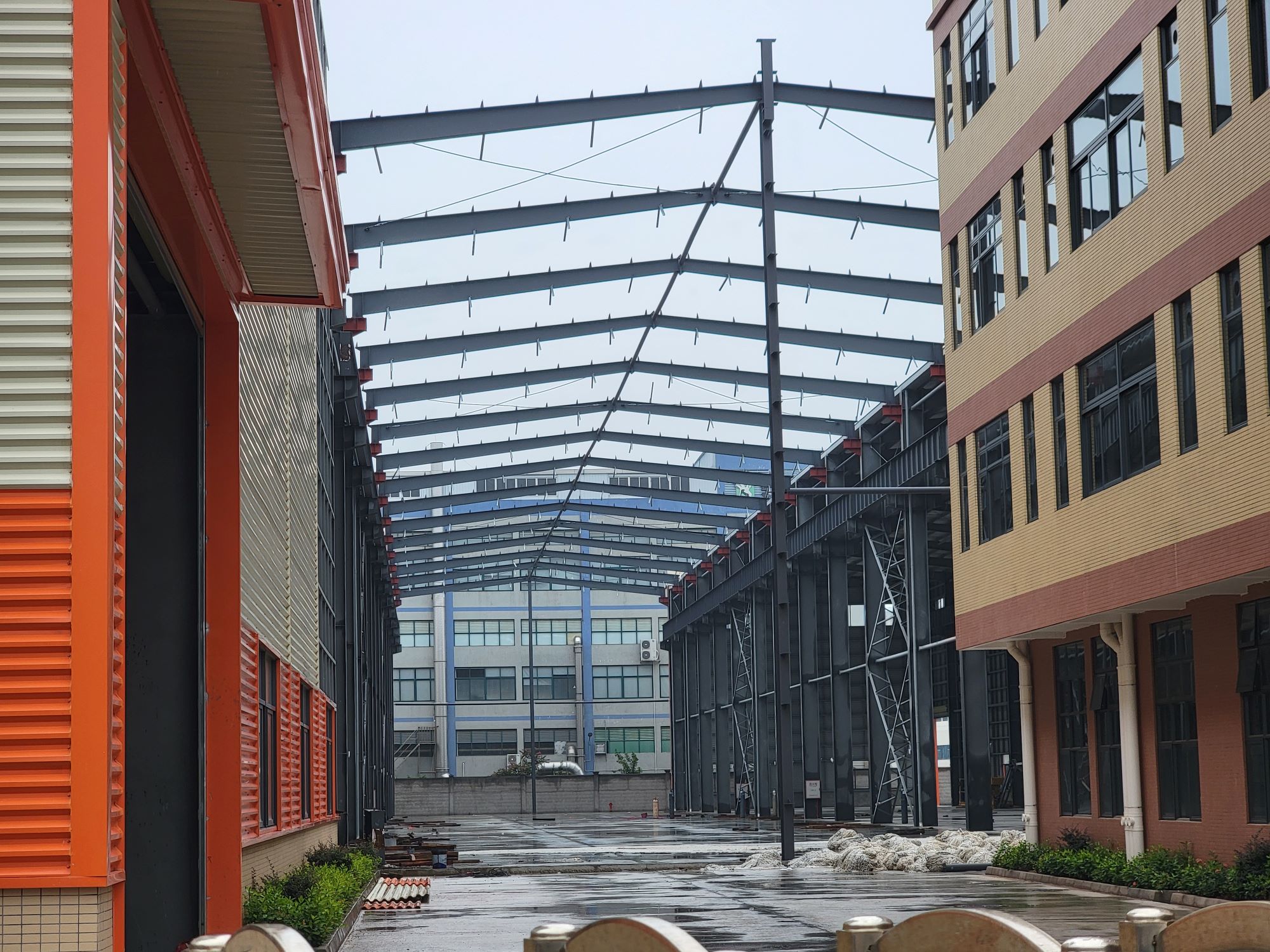
Steel industrial buildings are industrial structures in which steel serves as the primary load-bearing system. The main framework typically consists of steel columns, beams, rafters, and bracing systems, while the enclosure system uses metal sheets or insulated sandwich panels.
Typical applications include:
Manufacturing plants
Warehouses
Logistics centers
Cold storage facilities
Agricultural processing buildings
Light industrial workshops
The core characteristics are:
Lightweight structural system
High strength-to-weight ratio
Fast construction
Capability to achieve large clear spans without interior columns
| Comparison Factor | Steel Industrial Buildings | Concrete Industrial Buildings |
|---|---|---|
| Structural Weight | Lighter | Heavier |
| Construction Method | Prefabrication + on-site assembly | Mostly cast-in-place |
| Span Capability | Large clear spans achievable | More structural limitations |
| Expansion Flexibility | Easier to expand or modify | More complex to modify |
| Seismic Performance | Good ductility | Higher rigidity |
These differences make steel industrial buildings particularly suitable for projects requiring flexibility and speed.

A well-designed structure ensures both safety and cost efficiency.
The design of steel industrial buildings generally follows these principles:
Structural safety
Stability
Economic efficiency
Constructability
Ease of maintenance
All structural members must be calculated and verified according to applicable local building codes and standards.
Structural design typically includes analysis of:
Dead Load
Live Load
Wind Load
Snow Load
Seismic Load
Requirements vary depending on geographic location. Therefore, steel industrial buildings must be engineered specifically for the project site to ensure compliance and structural integrity.
One of the key advantages of steel industrial buildings is the ability to achieve large clear-span layouts.
Common design considerations include:
Single-span or multi-span configurations
Optimized column spacing to reduce steel consumption
Minimizing interior columns to maximize usable space
Large clear spans improve:
Production line flexibility
Equipment installation efficiency
Internal logistics flow
Although the superstructure is steel, it is typically supported by reinforced concrete foundations. Key elements include:
Pre-embedded anchor bolts
Base plate connections
Grouting beneath base plates
Foundation design must be coordinated with the steel structure to ensure overall system stability.
Understanding structural components is essential when evaluating project quality.
Main load-bearing members include:
Steel columns
Steel beams
Rafters
Bracing systems
These components form the structural skeleton of steel industrial buildings and resist vertical and lateral loads.
Secondary members support the enclosure system and improve structural stability:
Purlins
Girts
Tie rods
Sag rods
Proper secondary framing enhances load distribution and optimizes material efficiency.
Common enclosure systems include:
Corrugated steel sheets
Insulated sandwich panels
Metal cladding systems
Depending on project requirements, systems may incorporate:
Thermal insulation
Fire resistance ratings
Anti-corrosion treatments
Skylight panels for natural daylight
Connections typically include:
High-strength bolted connections
Welded connections
The quality of connection design and fabrication directly affects structural safety and long-term durability.
Factory fabrication
Standardized production
Rapid on-site assembly
This significantly reduces overall project timelines.
Steel provides excellent structural capacity while maintaining a relatively lightweight framework, reducing foundation loads.
Future expansion can often be achieved by extending building length or adding additional spans, making steel industrial buildings adaptable to business growth.
Steel is recyclable, supporting sustainable construction practices and long-term environmental considerations.
Typical industries and uses include:
Manufacturing facilities
Warehousing and storage
Logistics and distribution centers
Agricultural processing facilities
Mechanical workshops
Globally, steel industrial buildings have become a preferred solution for industrial development due to their efficiency and adaptability.
A standard industrial steel project generally follows these stages:
Structural engineering design
Shop drawing preparation
Steel fabrication
Surface treatment and corrosion protection
Quality inspection
Packing and transportation
On-site installation
A well-controlled process ensures structural reliability and consistent project delivery.

When selecting a supplier, key evaluation factors include:
In-house engineering capabilities
Fabrication capacity and equipment
International project experience
Proven project portfolio
Technical support and after-sales service
For long-term industrial investments, a supplier's engineering expertise and delivery reliability directly influence project success and operational stability.
Steel industrial buildings provide a structurally efficient, economically practical, and sustainable solution for modern industrial construction. Through proper engineering design, standardized fabrication, and professional installation management, these buildings can deliver long-term performance and operational flexibility.
For professional consultation and a customized quotation for your steel industrial buildings project, contact us today at liyousteelstructure@outlook.com — our engineering team is ready to support you.
