
Guangdong LiYou Steel Structure Engineering Co., Ltd. +8619147784007 liyousteelstructure@outlook.com
Views: 36 Author: Site Editor Publish Time: 2026-01-17 Origin: Site
In steel building design, a steel structure bracing system is not an auxiliary component. It is a fundamental structural system that governs overall stability, lateral stiffness, and structural behavior under horizontal loads.
From an engineering perspective, steel structures are typically composed of two primary systems:
Gravity load–resisting system, where beams and columns carry vertical loads
Lateral force–resisting system, which resists wind loads, seismic forces, and other horizontal actions
The bracing system is one of the most efficient forms of lateral force–resisting systems. By introducing diagonal members into the steel frame, lateral forces that would otherwise be resisted through bending are transformed into axial forces. This significantly improves structural efficiency and predictability.
Steel structures typically exhibit the following characteristics:
Relatively slender members
Overall stiffness highly dependent on system configuration
Lateral displacement often governs design rather than strength
When lateral resistance relies only on beam and column bending, the structure may experience:
Excessive lateral drift
Pronounced second-order effects
Amplified internal forces in primary members
A properly designed brace in structure effectively limits lateral displacement at an early stage, improving global structural performance at the system level.
In industrial plants and warehouse buildings, the importance of a bracing system is further amplified due to:
Large roof spans
Tall column heights
Large openings and flexible interior layouts
Wind load control often being more critical than seismic demand
For these structures, a steel structure bracing system is a fundamental requirement for both safety and serviceability, not an optional design feature.

Any effective bracing system must clearly define how lateral forces are transferred:
From roof or floor diaphragms
Through bracing members
Into columns and foundations
Design must ensure vertical continuity of bracing and avoid situations where lateral forces cannot be properly transferred between stories.
Bracing layout should be evaluated at the building level rather than at individual frames only:
Stiffness should be reasonably uniform in plan
Torsional effects should be minimized
Lateral stiffness in orthogonal directions should be compatible
Balanced stiffness distribution is essential to avoid unintended force concentrations and structural irregularities.
Depending on the bracing configuration, members may:
Primarily resist tension
Primarily resist compression
Alternate between tension and compression under different load cases
Design must consider member stability, connection detailing, and constructability to ensure actual behavior aligns with design assumptions.
Cross bracing steel systems form stable triangular configurations that allow lateral forces to be resisted primarily through axial action.
Engineering advantages include:
High lateral stiffness
Clear and reliable force paths
Well-established analytical models
Design trade-offs include:
Reduced flexibility for architectural openings
Potential interference with internal circulation
In industrial and warehouse buildings, cross bracing steel is commonly located in:
End bays
Secondary functional zones
Areas with minimal equipment interference
Single diagonal bracing systems are often used for:
Local lateral strengthening
End wall frames
Space-restricted zones
They offer layout flexibility but require careful consideration of compression stability in bracing members.
These systems provide greater architectural flexibility but introduce additional structural considerations:
Axial forces are partially transferred into beams
Beam force demand increases
Connection detailing becomes more complex
As a result, these systems require more refined global analysis and coordinated detailing during the design phase.
Compared with moment-resisting frames, braced frames typically offer:
Greater lateral stiffness
More economical steel usage
More predictable structural behavior
This explains why steel structure bracing systems are widely adopted in industrial and warehouse applications.

From a performance standpoint, a properly designed bracing system significantly improves:
Global lateral stiffness
Story drift control
Internal force distribution among members
In large-scale and multi-bay steel buildings, bracing layout often determines whether the structure achieves both visual lightness and long-term stability.
In real projects, bracing system design must be integrated with multiple constraints:
Functional requirements of the building
Equipment and overhead crane systems
Fabrication and transportation conditions
On-site installation efficiency
Successful designs strike a balance between structural safety, functional usability, and manufacturing feasibility.
Dimensional accuracy directly affects installation quality
Connection plate fabrication determines joint reliability
Consistency of bracing members supports uniform system behavior
Installation sequence influences temporary structural stability
Connection quality ensures that design assumptions are achieved in practice
For integrated design-and-fabrication steel structure manufacturers, this phase is particularly critical.
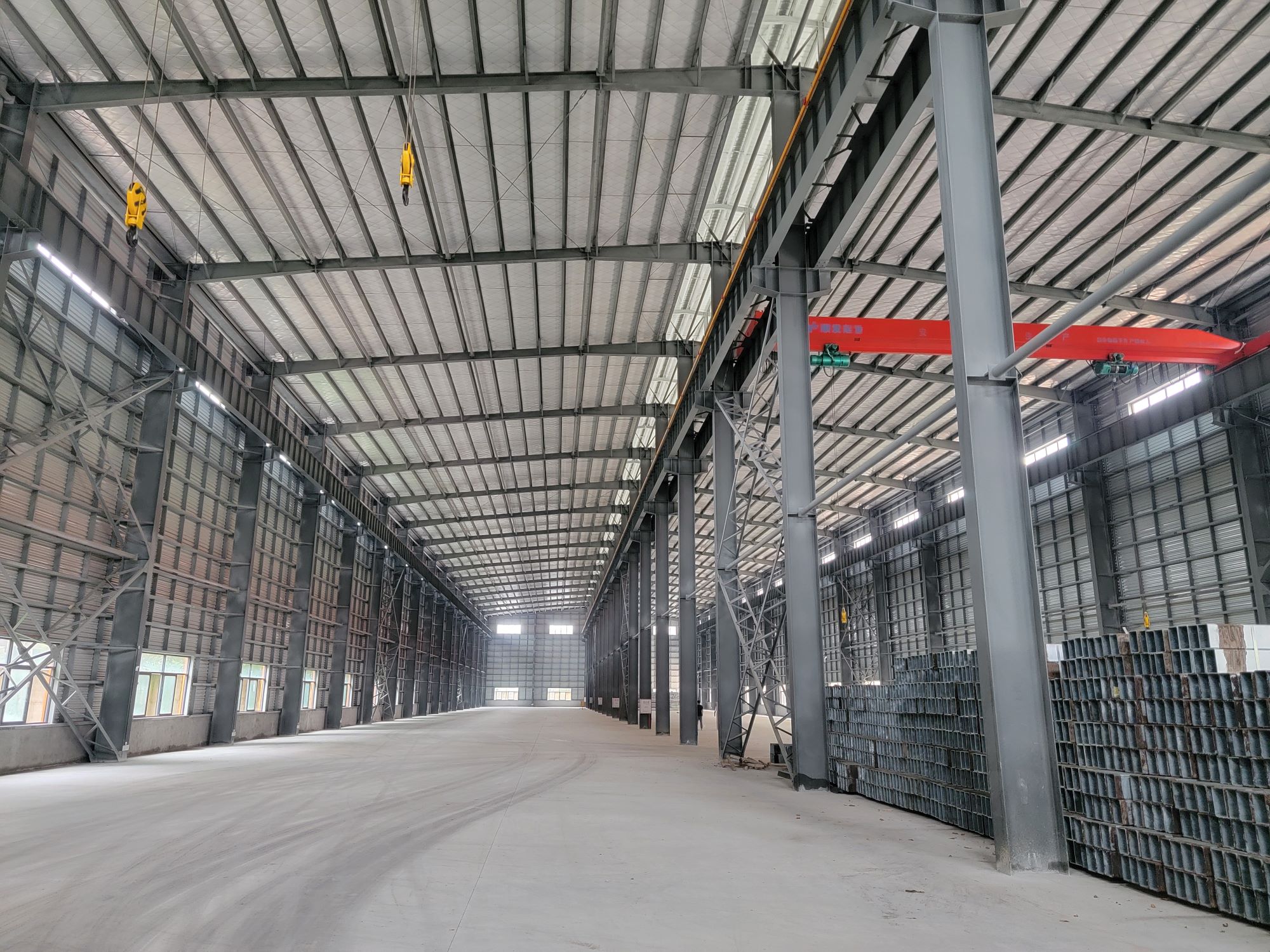
Frequent issues observed in practice include:
Focusing on individual member strength while ignoring system behavior
Discontinuous bracing layouts in elevation or plan
Design and construction misalignment requiring on-site modifications
Inadequate attention to joint stiffness and detailing
A steel structure bracing system is central to the safety, stability, and economic efficiency of steel buildings.
Only by understanding structural mechanics at the system level during design, and by maintaining strict quality control during fabrication and installation, can the bracing system perform effectively throughout the building's service life.
For industrial plants and warehouse buildings, project-specific and system-oriented bracing design remains the most reliable approach to achieving safe, efficient, and durable steel structures. Email: liyousteelstructure@outlook.com
