
Guangdong LiYou Steel Structure Engineering Co., Ltd. +8619147784007 liyousteelstructure@outlook.com
Views: 41 Author: Site Editor Publish Time: 2026-01-24 Origin: Site
From a structural engineering standpoint, warehouse structures are not a single building type. They represent a category of industrial structural systems developed around three fundamental objectives: large clear space, operational efficiency, and long-term adaptability.
Unlike office or commercial buildings, warehouse structures place minimal emphasis on façade expression. Instead, structural decisions are driven by engineering priorities such as:
Maximizing usable internal space
Ensuring stable and reliable load-bearing performance over time
Adapting to evolving logistics and storage requirements
As a result, the selected structural system for warehouse structures has a decisive influence on project cost, construction schedule, and future expansion capability from the earliest design stage.
Warehouse buildings typically require continuous, unobstructed interior space to support racking systems, automated equipment, and logistics circulation. This leads to clear structural requirements:
Minimizing the number of interior columns
Increasing single-span structural lengths
Controlling beam and column dimensions to preserve effective usable space
Steel structural systems offer inherent advantages in this regard and are therefore the preferred solution for most warehouse structures.
With the widespread adoption of high-bay racking and automated storage systems, clear height requirements for warehouse structures continue to increase. Structural design must address not only load capacity but also spatial coordination, including:
Beam depth and roof structural configuration
The spatial impact of bracing systems
Safe clearance for equipment installation and operation
This makes warehouse structures more dependent on integrated system coordination rather than isolated member calculations.
Warehouse structures are commonly subjected to multiple load cases acting simultaneously, including:
Structural self-weight
Roof loads
Storage and stacking loads
Equipment and forklift loads
Wind and seismic actions
Structural systems must comply with applicable design codes while maintaining stable and predictable behavior throughout long-term service conditions.
Unlike single-use buildings, many warehouse structures require functional or spatial modifications during their service life, such as:
Increasing building footprint
Reconfiguring internal functions
Upgrading logistics systems
For this reason, structural solutions should consider future expansion possibilities at the initial design stage, including end-bay extensions and modular structural continuity.
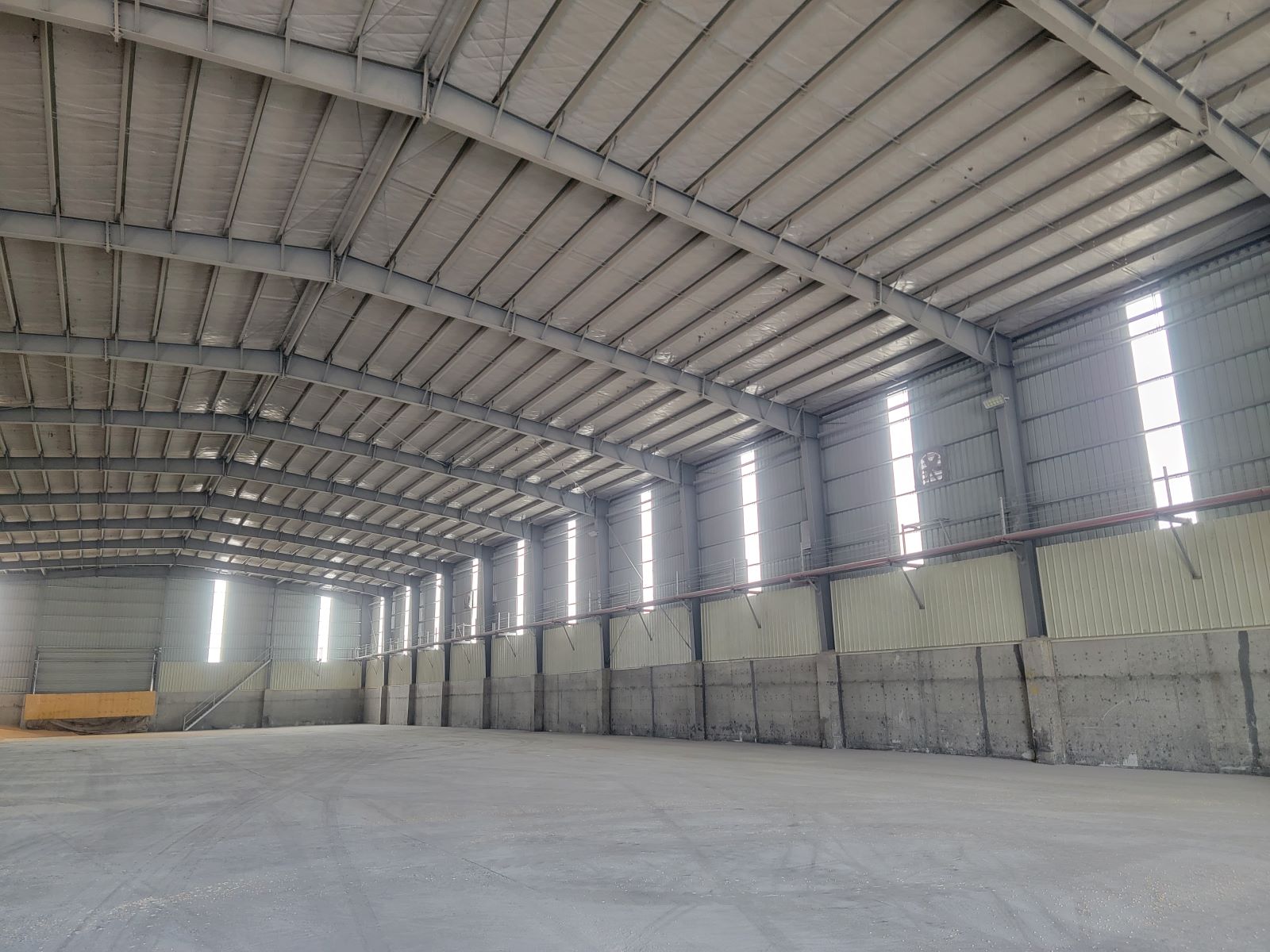
Steel framing is one of the most widely adopted structural systems in warehouse structures. Its engineering advantages include:
Clear and efficient load paths
High levels of component standardization
Easy integration with various bracing systems
This system is suitable for most medium to large warehouse projects, especially where structural flexibility is required.
In warehouse structures, bracing systems primarily serve to:
Resist wind actions
Control lateral displacement
Improve overall structural stability
Proper bracing layout can significantly reduce internal forces in primary members, allowing for more economical structural solutions without compromising safety.
Portal frame and rigid frame systems offer clear advantages in small to medium span warehouse structures, including:
Relatively simple structural configuration
Shorter construction cycles
Direct and predictable cost control
These systems are commonly used in logistics warehouses and light industrial facilities.
A prefabricated warehouse building represents more than a change in construction method. It is a manufacturing-driven approach that emphasizes dimensional accuracy, quality consistency, and engineering controllability.
Higher component fabrication accuracy
Improved consistency in connection detailing
Better traceability within quality control processes
By adopting a prefabricated warehouse building approach, on-site uncertainties can be significantly reduced, resulting in more predictable construction timelines and lower execution risk.

From an engineering performance perspective, warehouse structures are typically evaluated based on the following criteria:
Maintaining overall stability under extreme load combinations is a fundamental requirement for all warehouse structures.
Through appropriate structural systems and bracing layouts, lateral displacement and service-level deformation must be controlled to ensure safety and usability during operation.
Structural design must account for deformation control and durability under sustained loads, ensuring reliable performance throughout the entire service life of the building.
Structural design for warehouse structures must directly support operational requirements, including:
Racking system layout
Automated equipment operation
Forklift and heavy logistics vehicle movement
Loading dock arrangement and traffic organization
A structurally sound design that fails to align with operational needs will not deliver real project value.
Dimensional accuracy of structural members
Quality of connection plates and detailing
Consistency across batch production
Logical erection sequencing
Temporary stability measures
Installation tolerances and connection integrity
Companies that integrate design and manufacturing capabilities demonstrate a clear advantage at this stage.
From an investment perspective, the value of warehouse structures is reflected in:
Rational initial structural investment
Predictable construction schedules
Lower long-term maintenance costs
Strong adaptability for future expansion and modification
In many projects, steel structures combined with prefabricated warehouse building solutions deliver superior lifecycle value.
Typical challenges encountered in real-world projects include:
Structural control difficulties associated with large spans
Conflicts between functional requirements and structural layouts
Restricted construction schedules and site conditions
These risks can be significantly reduced through early-stage structural planning and close coordination between design and fabrication.

The design and construction of warehouse structures is fundamentally a system engineering task.
Only through a comprehensive understanding of structural behavior, operational requirements, and manufacturing constraints can a solution be achieved that is safe, economical, and valuable over the long term.
Steel structural systems and prefabricated warehouse building solutions provide a highly controllable, flexible, and reliable engineering pathway for modern warehouse development. Email: liyousteelstructure@outlook.com
